
Fourth Meeting of the EU-Japan Digital Partnership Council Held
- Published:
EU-Japan Digital Partnership Council Held
Meeting Overview
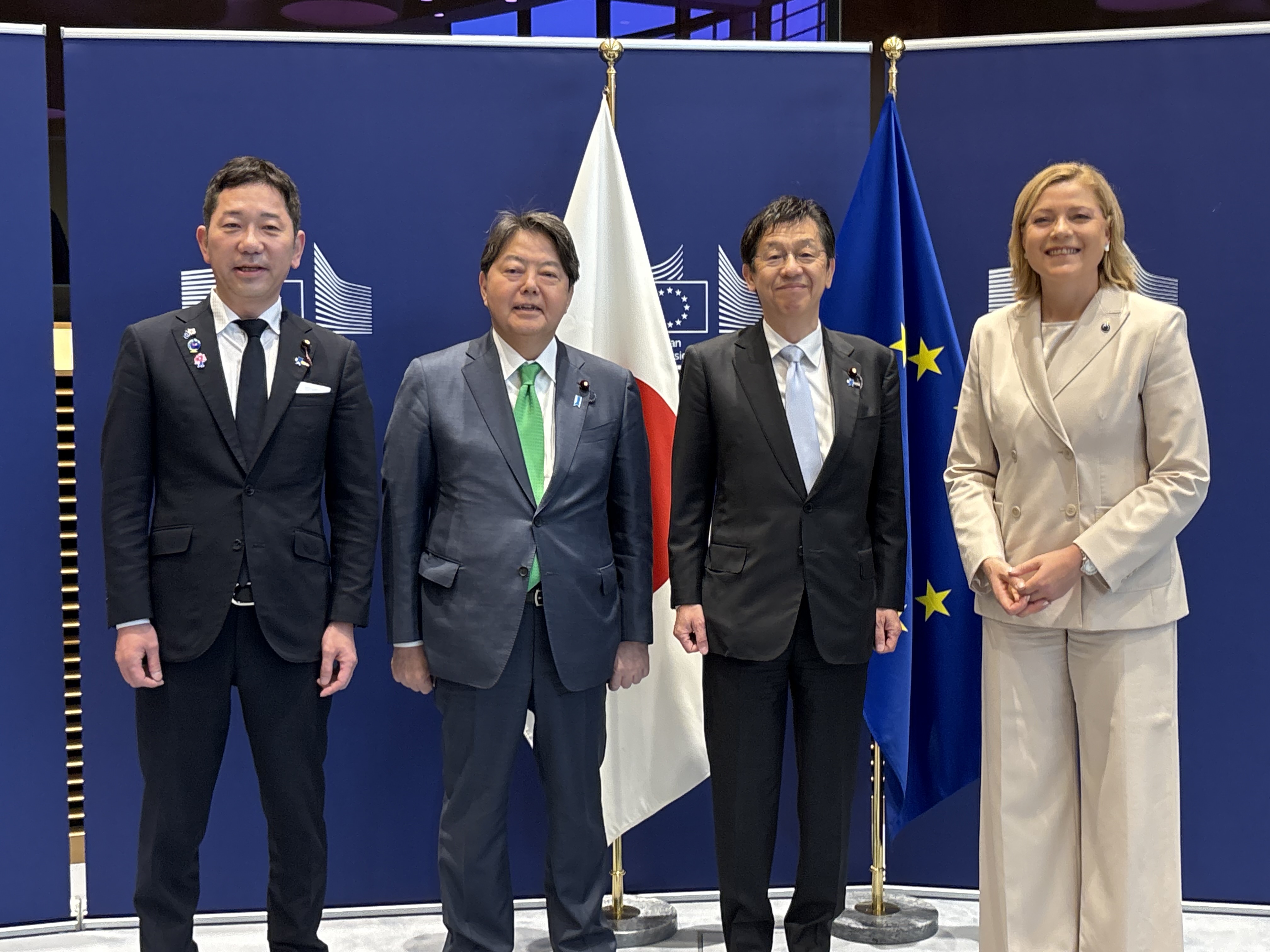
The fourth meeting of the EU-Japan Digital Partnership Council was held on May 5 in Brussels, Belgium. It was co-chaired by Minister for Digital Transformation Matsumoto, Minister for Internal Affairs and Communications Hayashi, Parliamentary Vice-Minister of Economy, Trade and Industry Ochi for Japan, and Executive Vice-President of the European Commission for Technological Sovereignty, Security and Democracy, Virkkunen. After the meeting, Japan and the EU issued a Joint Statement as an outcome of the discussions.
Joint Statement
The main points of the Joint Statement are as follows:
1. Data Governance and DFFT
- Data Strategy Working Group
- Recognizing that seamless and secure data flows are foundational to the modern economy and essential for the development of Artificial Intelligence (AI), both sides decided to launch an “EU-Japan Data Strategy Working Group.”
- Joint development and interoperability of Data Spaces
- Both sides deepened discussions on specific use cases for the joint development and interoperability of European data spaces and the Japanese data spaces.
- DFFT and International Cooperation
- Both sides reaffirmed their commitment to operationalising DFFT to counter digital protectionism and ensure open and trusted data flows.
- Digital Identity and Trust Services
- Both sides piloted the interoperability of digital identity credentials to confirm that they could be appropriately issued, stored, presented, and verified across different countries and regions.
- Electronic Signatures
- Both sides have initiated contact to deepen discussions on verification of electronic signature service providers.
- Protection of Personal Data
- Both sides welcomed the successful conclusion of talks on expanding the scope of the EU adequacy decision on Japan to academia and research and confirmed their intention to intensify the talks regarding the extension of the adequacy decision to the public sector.
2. Artificial Intelligence (AI)
- AI
- Responsible AI Innovation: Both sides reaffirmed their shared commitment to promoting safe, secure and trustworthy AI as well as signing a Cooperation Arrangement.
- Global Governance: Both sides reaffirmed the need to continue exchanging information in the context of international AI governance initiatives and seeking to align positions in international forums, e.g., in the United Nations. Both sides will encourage more governments and private sector partners, including from the Global South, to support the principles of the Hiroshima AI Process and to join its Friends Group.
- Regulatory Cooperation: Both sides acknowledged the importance of strengthening cooperation to enhance mutual understanding of governance frameworks.
- Governmental AI: Both sides decided to exchange best practices on AI adoption in the public sector.
- AI Summits: Both sides welcomed cooperation between the EU and Japan regarding AI Summits, including toward the potential hosting of an AI Summit in Japan.
- Quantum Technology
- Both sides welcomed the deepening of cooperation based on the Letter of Intent (LoI) on Strengthening Cooperation in the Area of Quantum Science and Technology and they committed to further strengthening collaboration in quantum research. Both sides welcomed the exchange of views on quantum communications technologies.
3. Secure Digital Infrastructure and Economic Security
- Submarine Cables
- Both sides welcomed the meetings of the EU-Japan Joint Working Group on Policy Issues for Global Connectivity and concurred on continuing the work of the Working Group.
- 5G/6G
- Both sides welcomed the progress of the joint research project, called "6G-MIRAI-HARMONY." Both sides will enhance their collaboration on the international standardisation of future communication networks including 6G technology.
- Semiconductors
- Both sides confirmed the implementation of the MoC on Semiconductors. They committed to continuing the information exchange on supply chain resilience, including the effective use of the "Early Warning Mechanism" to anticipate and mitigate disruptions caused by geopolitical or natural factors.
- Cybersecurity
- Both sides welcomed the progress of the 7th EU-Japan Cyber Dialogue, held in January 2026. They committed to advancing cooperation on potential mutual recognition of cybersecurity schemes for IoT products, specifically working towards aligning the EU’s requirements under the Cyber Resilience Act and Japan’s JC-STAR scheme. Both sides will continue to cooperate on cyber capacity building in third countries, specifically in the Indo-Pacific through the Industrial Control Systems Cybersecurity Week and through the ASEAN-Japan Cybersecurity Capacity Building Centre.
- Digital Standards
- Both sides welcomed the closer links between the Japanese Industrial Standards Committee (JISC) and the European Committee for Electrotechnical Standardisation (CENELEC).
4. Platform Regulation
- Platform Cooperation
- Both sides recognised the importance of protecting minors online, affirming their commitment to promote appropriate policy measures and enforce applicable regulations, including the Digital Services Act (DSA) on the EU-side to safeguard the physical and psychological well-being and the rights of minors online. Both sides welcomed the Cooperation Arrangement between the Ministry of Internal Affairs and Communications (MIC) and the Directorate-General for Communications Networks, Content and Technology (DG CONNECT) in their respective capacities as enforcers to deepen cooperation on issues of common interest relating to the implementation of the DSA and Japan’s Information Distribution Platform Act.
5. Way Forward
- New topics of discussion
- Both sides will pursue working level information exchange on video game and audiovisual strategies.
- Industry Engagement
- Both sides confirmed that the Digital Partnership will increasingly progress towards the creation of concrete and substantial deliverables, necessitating the engagement of industry. They started exploring the complementarities of the respective tech business offers to work towards joint activities in third countries, for example in the area of secure and trusted digital infrastructure.
- Multilateral cooperation
- Both sides concurred to cooperate together, and with other partners, in the pursuit of shared interests in the context of multilateral bodies emphasizing shared interests such as robust multilateralism and openness to trade.
6. Next Steps
Both sides decided to convene the 5th meeting of the EU-Japan Digital Partnership Council in Tokyo in 2027 to review progress and further deepen their strategic cooperation.
Attached document
Bilateral Meeting with Executive Vice-President of the European Commission Virkkunen
Prior to the Council meeting, Minister Matsumoto held a bilateral meeting with Executive Vice-President of the European Commission Virkkunen.
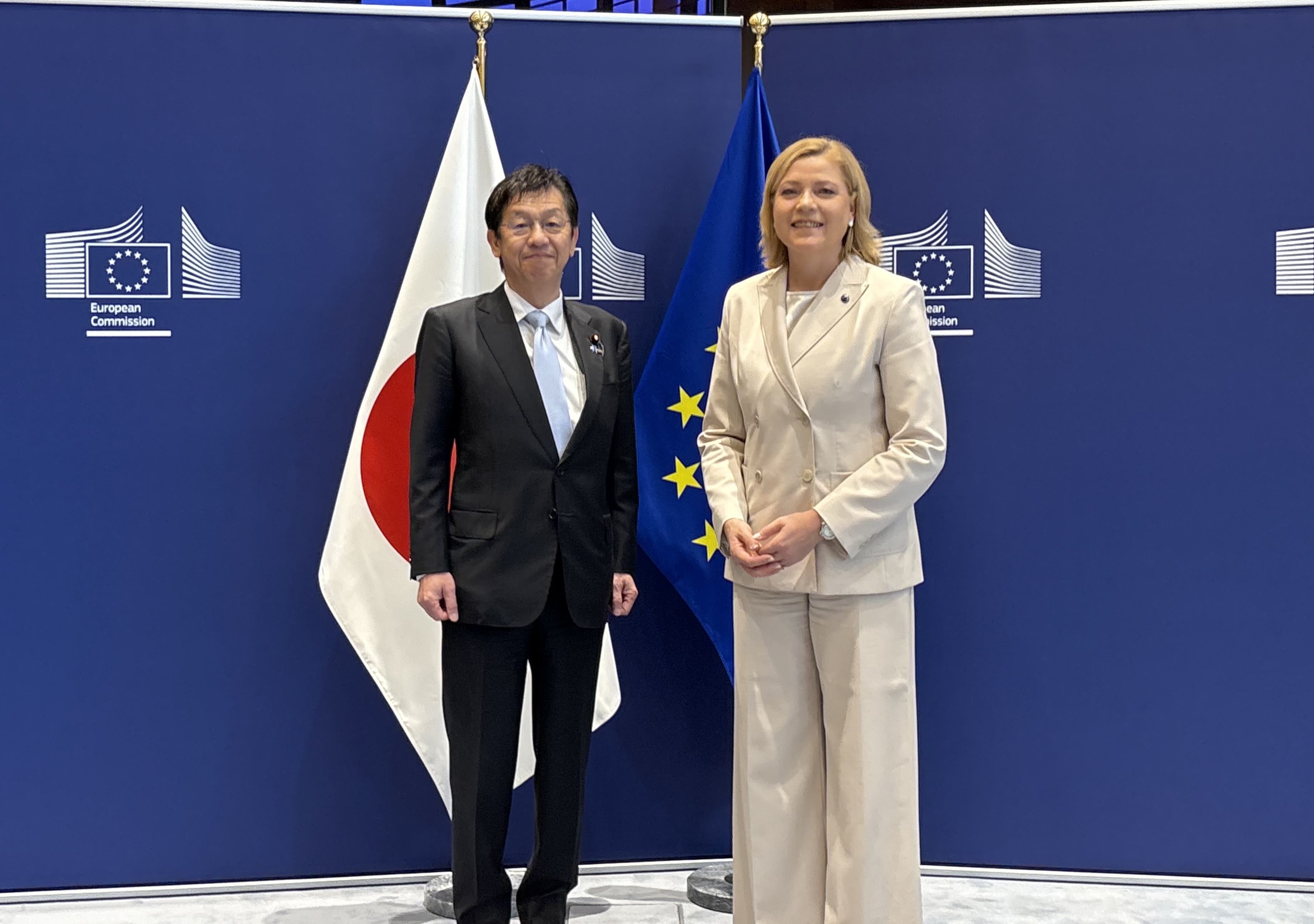
During the meeting, both sides confirmed the importance of developing cooperation in the digital field into concrete activities, with the EU recognising Japan as a "like-minded partner" sharing fundamental democratic values and the rule of law. As a first step, they confirmed the significance of launching the “Data Strategy Working Group" at the EU-Japan Digital Partnership Council.
In addition, Japan introduced its initiatives regarding the Government AI "GENAI" for administrative officials, deployed by the Digital Agency, and shared its intention to expand its use to countries in the Global South. Furthermore, both sides welcomed the successful execution of the pilot project for the exchange of verifiable credentials for student academic records based on the Memorandum of Cooperation (MoC) on Digital Identities and Trust Services.